Japan.
So you're heading to Japan? Let's get it right.
READ TOKYO FREEWhere to go (and what to skip)
Snow country, priced
Cherry blossom + Mt Fuji timing
Where to stay
How to get around — the Shinkansen
Food, etiquette + the nightlife
Tokyo, on us.
This is one section of 6 in the guide.
Lucas's #1 Tokyo hostel. Social hostel with a bar built into the lobby — easy to meet other Aussies + Kiwis travelling. Walking distance (5 min) to Shibuya Crossing + Shibuya Square. Friendly staff who speak English. Dorms ~A$45/night, privates from ~A$120.
Tip: Book direct via wiseowlhostels.com or Hostelworld 2-3 months ahead in peak (cherry blossom + autumn). The downstairs bar is the social hub — go down for the first night to meet people.
Lucas's #2. Modern hostel near the Kabukicho nightlife area, walking distance to Golden Gai + Omoide Yokocho + Shinjuku Station. Sleek facilities, design-y common areas, café downstairs. Dorms ~A$50, privates from ~A$130.
Tip: Book via unplan.jp directly. The location is the move — walk home from Kabukicho at 3am instead of last-train scramble. Quieter than party-hostel vibes — easier for older travellers.
Aussie + backpacker-magnet hostel in Asakusa. Cheaper than Shibuya/Shinjuku (~A$30 dorm), proper kitchen, party-friendly bar. Walking distance to Senso-ji Temple. Best for budget + meeting other travellers.
Boutique hostel in Asakusa — beautiful timber design, hipster crowd, in-house café + bar that's a destination on its own. Quieter than Khaosan. Dorms A$40-A$55.
The famous chain everyone Instagrams. Solo booths (individual stalls with a curtain in front), order on a paper form, ramen slides under the curtain. Tonkotsu pork broth, perfect for first-timers. ¥1,000 (A$10) a bowl. Multiple Tokyo locations, the Shibuya + Shinjuku branches are 24hr.
Tip: Yes it's a chain, yes it's touristy, yes do it once — the experience is the point. Customise the slider form to your taste — medium spice, firm noodles, extra green onion is the rookie's go.
Light yuzu-citrus + sea salt broth, chashu pork, clear elegant style. Polar opposite of Ichiran. Multiple Tokyo locations — Roppongi flagship is the cleanest experience. ¥1,200 a bowl.
Tip: Best for those who find tonkotsu too heavy. Order with ajitama (soft egg) +¥150. Order from the vending machine at the entrance.
World's first Michelin-starred ramen shop. Sugamo neighbourhood. Truffle-shoyu ramen with whole black truffle slices. ¥2,000 (A$20). Lottery + ticket system — show up at 7:30am, draw a numbered ticket for your specific eating slot later in the day.
Tip: Worth the early morning queue + return-trip if you're a foodie. Otherwise skip — the lesser-known equivalent ramens in Tokyo are 90% as good without the hassle.
Lamb-bone broth ramen + truffle-mushroom + creative seasonal specials. Multiple branches; Toranomon is the flagship. Chef Tomoharu Shono is internationally respected.
8 top ramen shops side-by-side in the basement of Tokyo Station (B1F, First Avenue Tokyo). Rokurinsha (the dipping ramen tsukemen champion) is the standout. Easy to taste 2-3 styles in one sitting between trains.
Tip: Rokurinsha runs a 60+ minute queue at lunch. Go at 10:30am or 3pm for a 10-15 min wait. Tsukemen (dipping noodles) is the order — cold noodles dipped into hot rich broth.
The world's largest wholesale fish market (replaced Tsukiji inner market in 2018). Tuna auctions visible from observation decks 5:30am-6:30am. Plus the Sushi Dai + Daiwa Sushi institutions (transferred from Tsukiji) for the freshest 6am sushi breakfast on Earth.
Tip: Book the tuna auction observation deck via the Tokyo Metropolitan Government website 1 month ahead — slots are free but limited. Public access without booking gives you the upper deck view.
The OUTER market stayed when the inner moved to Toyosu. Fresh tuna bowls, oysters, sweet egg omelette skewers, knife shops. Easier access than Toyosu, doesn't require a 5am wake-up. Open 5am-2pm; busiest 8-11am.
Tip: Sushizanmai for the affordable conveyor sushi. Walk all the small stalls — the uni (sea urchin) shooters + grilled tuna head are the standouts.
Tiny narrow alley of yakitori bars under the Shinjuku tracks. Charcoal smoke + neon + 5-seat counters. Asadachi + Iyenaga + Daikokuya are the long-runners. ¥200-¥400 per skewer.
Tip: Show up by 6:30pm for a seat. Order 3-4 skewers + a small Asahi. Cash only at most. Quiet at 5pm, packed by 8pm.
6 alleys of 200+ tiny bars (most seat 5-8 people). Some refuse foreigners (look for English signs or '外国人歓迎' = welcomes foreigners). Cover charge ¥500-¥1,000, drinks ¥800-¥1,500. Don't open a bar door unless you'll order something.
Tip: Albatross + Open Book + La Jetée are foreigner-friendly + English-speaking. Avoid the touts at the entrance to the alleys. Bring cash. Don't stay more than one drink per bar — keep moving to experience the variety.
The Jiro Dreams of Sushi institution in Ginza. 3-Michelin-star sushi, 20-piece omakase ¥40,000+ (A$400+), the chef Jiro Ono now in his late 90s. Books months ahead via concierge of high-end hotels only.
Tip: Realistically you won't get in. Alternative: Sushizanmai (the affordable 24hr chain), or Uogashi Nihon-Ichi standing sushi bars (¥200-¥400 per piece, no booking, central locations).
Counter sushi where you stand + eat fast. ¥200-¥500 per piece — half the price of seated sushi. Uogashi Nihon-Ichi has multiple Tokyo branches (Shibuya, Akihabara, Shinjuku). Conveyor sushi (kaiten zushi) like Sushiro or Kura Sushi for the kid-friendly cheap version (¥110 per plate).
Tarantino's inspiration for the House of Blue Leaves fight scene. Two-storey wooden izakaya in Nishi-Azabu. Touristy but the atmosphere is the appeal. Yakitori + sashimi + sake. ¥4,000-¥6,000 (A$40-A$60) per head.
Mandatory Japanese experience. Egg salad sandwiches (FamilyMart's tamago sando is internet-famous), onigiri rice balls (¥150-¥200), karaage (fried chicken), hot oden in winter, dorayaki + mochi for dessert. Better than airport food back home.
Tip: FamilyMart for the tamago sando. Lawson for the karaage. 7-Eleven for everything else. ATMs at 7-Eleven accept all foreign cards (one of the few in Japan that do).
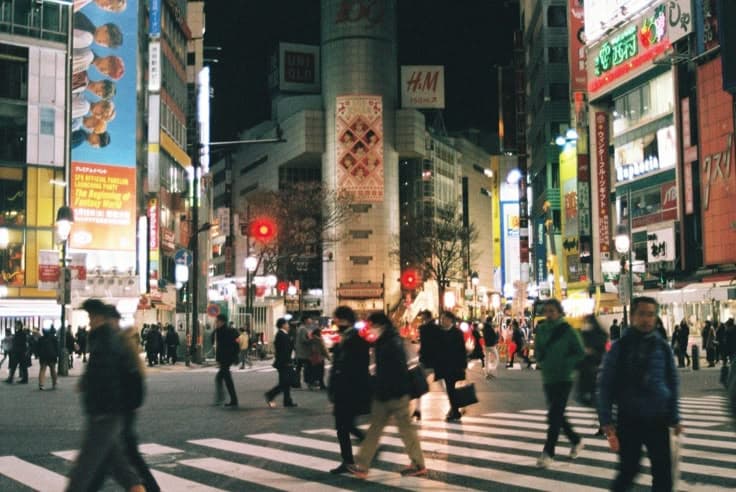
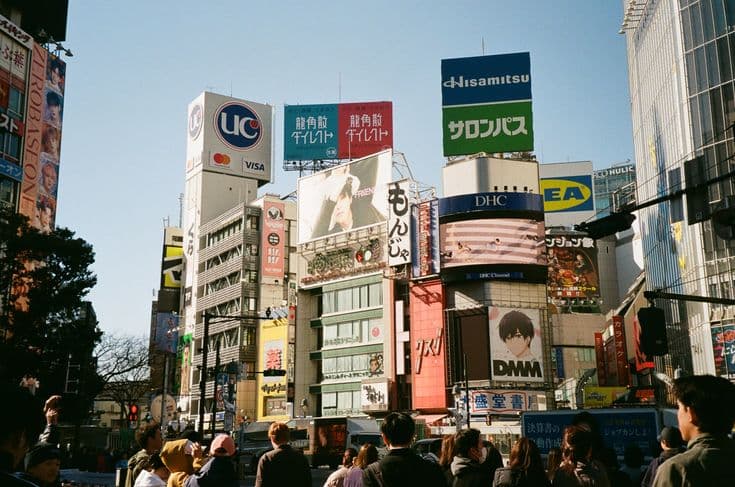
The world's busiest pedestrian crossing — 3,000 people every light cycle. Watch from Starbucks (Tsutaya building) for free. For the proper view, Shibuya Sky observation deck (45th + 46th floors of Shibuya Scramble Square) — ¥2,500, books out, get sunset slot.
Tip: Pre-book Shibuya Sky online 1-7 days ahead via skyhotel.com. The L'Occitane Café above Starbucks is the calmer free alternative to watch the crossing.
Tokyo's oldest temple (645 AD). Massive red Kaminarimon Gate + lantern, Nakamise shopping street (250m of stalls selling traditional sweets + souvenirs) leading up to the main hall. Free.
Tip: Sunrise (5:30am) for the empty temple shot. The Tokyo Skytree observation tower nearby is also worth a visit — free ground-level photo, ¥3,400 for the top.
Immersive digital art experience — barefoot through knee-deep water rooms, infinity-mirror crystal universe, flower-projection forest. 90 min visit. ¥3,800 (A$38). Books out 2-3 weeks ahead.
Tip: Wear shorts (rolled up trousers fine but shorts easier). Book direct via teamlab.art. Skip the Borderless branch in Azabudai — the Planets one is the headliner.
Shinto shrine in 700,000m² of forest in central Tokyo. Pass the giant cypress torii, walk the gravel path through the woods, the main hall. Free. Sunday morning often has traditional weddings.
Anime + manga + electronics central. Don Quijote AKB48 Theatre, Mandarake retro game shop, Super Potato (vintage games). The headline: multi-storey arcades (Sega Akihabara, Taito Game Station) — 5+ floors of UFO catchers, rhythm games, retro arcade cabinets. Don Quijote (the famous DQ Akihabara) is the 24hr 5-storey discount everything-store next door.
Tip: Avoid maid cafés — pricier than worth it now, occasionally scammy. Mandarake has 8 floors of vintage anime collectibles. The Yodobashi Camera multi-floor electronics megastore opposite the station is its own attraction.
Multi-storey karaoke chain — the Shibuya branch is the one used in Lost in Translation (the room number is famously 601, but they don't guarantee it). Private booths, ¥500-¥1,500/person/hour, all-you-can-drink optional. English songbook deep. Big Echo + Joysound + Pasela are the other big chains.
Tip: Late-night (10pm+) is the cheap rate. Order food + drinks through the wall phone. Bring 2-3 friends; karaoke alone is OK but the social version is the point.
Japan's pseudo-gambling — vertical pinball-meets-slot machines, tens of thousands of metal balls cascading down at deafening volume + chain-smoke haze. Genuinely an experience to walk into for 60 seconds, less so to play (the system is rigged + the wins exchanged for goods you trade off-site).
Tip: Walk in, stand 30 seconds, walk out. The Maruhan in Shibuya is the most accessible — ground floor visible from the street. Earplugs not optional for serious visits.
Standing sake bar in Ebisu/Shibuya area. 100+ sake from across Japan, ¥500-¥1,000 per glass. Order the tasting set (3-5 sake) to learn what you like.
Tip: Standing only, no seats. Bring a friend, drink 3-4 sake each, eat next door. Walking distance from Ebisu Station.
Sake shops with tasting counters. Imadeya Ginza has 1,000+ sake on the shelves + 5-10 tasting flights. Hasegawa Saketen has branches in Tokyo Station + Roppongi Hills — convenient for picking up sake to take home (or save for the hotel room).
The rest of Japan.
This chapter, the pre-departure checklist, the budget tool and the Japan chat, sent to your inbox.
5,600+ members, already there.
The guide gets you planned. The chats answer the rest, usually in minutes.
What buyers told us.
Booked the JR Pass on their advice the week before the price jumped, which paid for the guide several times over on its own. The Kyoto temple-timing tips got us to Fushimi Inari before the tour buses turned up. Genuinely the most useful $15 I spent on the whole trip.
First time in Japan and I was terrified of getting it wrong. The Tokyo neighbourhood rundown sorted out where to base myself in about ten minutes, and the Suica card walkthrough meant I wasn't the bloke holding up the gate at Shinjuku station. Worth ten times what I paid.
We were about to fly straight into peak cherry blossom and pay triple for it. The when-to-go section pointed us at late March in a quieter region instead: same sakura, half the crowds, way less money. I've read a lot on Japan and nothing else came close to this for actual planning.
Genuinely excellent. The konbini and ryokan etiquette tips saved me from a few rookie mistakes on day one. Only docked a star because I wanted more on Hokkaido beyond the ski resorts. Everything else is the most useful travel guide I've bought.
Bought the Italy guide. Then the Vault. Then Pro. That's how good these are. I'm pre-ordering every guide before they exist. The community alone is worth it.
$15 is nothing, I spend more than that on a single brunch. It saved me hours of planning and made the actual trip better. Honestly I'd have paid $50 for any of these guides.
Mistakes the guide saves you from.
Buying JR Pass when you don't need it (Tokyo-Kyoto-Osaka only)
Most first-timers since the 2023 price hike
Pocket WiFi rental when an eSIM is half the price + better signal
Travel-agent default
Cherry blossom accommodation booked < 6 months out (3x prices)
Anyone who doesn't read ahead
Niseko Christmas week accommodation booked < 12 months out
Aussie ski first-timers
Eating dinner at chain restaurants on Dotonbori (tourist pricing)
Most travellers, every meal
Carrying prescription painkillers without Yakkan Shoumei certificate
Held at customs — significant
Foreign-ATM declined cards (need to use 7-Eleven or Japan Post)
Every traveller, multiple times
Tipping at restaurants (rude + sometimes refused)
Aussies trying to be polite, end up insulting
Buying gifts at Narita airport at 3x city prices
Last-minute return-flight shoppers
Common questions.
Why pay A$14.99 when there's free info on Reddit?
Is the JR Pass still worth it?
When do I book ski accommodation for Niseko?
Can I climb Mt Fuji as a casual hiker?
Will my Aussie debit card work?
Do I need to speak Japanese?
I'm doing Japan + Thailand + Indonesia. All-Access Pass?
Your trip, planned.
Where to go. Where to stay. What to eat. How to get around. What to skip. Every answer in one place — researched by Aussies who've actually been.